
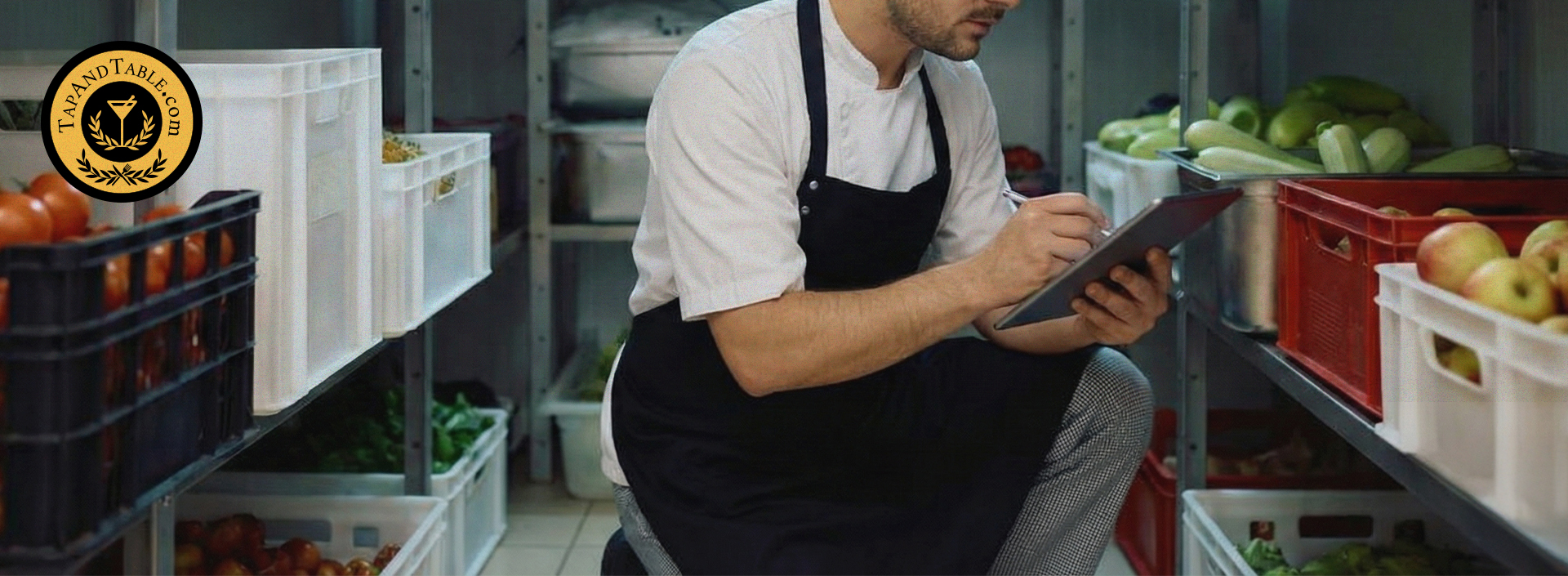
How to Stop Overstocking Your Restaurant Inventory
Overstocking feels harmless when you are in the middle of a busy week. You tell yourself you would rather have too much than not enough. The walk-in looks full, the shelves look secure, and it’s comforting.
At the same time, overstocking drains cash flow faster than almost any other operational mistake. It leads to waste, ties up capital, hides theft, creates blind spots in your menu margin, and gives you a false sense of stability. Many operators only notice this after bringing in restaurant management consulting services to assess why margins keep slipping.
Every restaurant that reaches out to TapAndTable with inventory issues usually has the same story. They are ordering based on fear instead of data. The fix is not complicated, but it does require discipline. Many insights come straight from structured restaurant consulting services that help operators stabilize operations and tighten controls. If you want tighter margins, cleaner operations, and fewer surprises, you have to get control of your PAR levels and your purchasing habits.
Let’s talk about how to break the cycle.
1. Know Your Real Usage, Not Your Gut Feeling
Most restaurants overstock because they are guessing. The chef thinks you need more chicken because the station looked light last night. The bartender orders three extra cases of tequila because the weekend “felt busy.” Your gut may be creative, but it’s not accurate when it comes to inventory. Stronger restaurant supply chain solutions rely on actual usage, not anxiety.
You need to know your daily usage. That means tracking what actually goes out the door, not what you think is going out.
There are two simple ways to get this right.
One, use a system. Any decent POS paired with a costing tool will track depletion down to the ounce or gram. Two, if you are not ready for a full system, do a short weekly manual count on your highest volume items, such as proteins, fryer oil, liquor, high-cost produce, and key mixers. Track them at the same time every week and watch the pattern. Within three or four weeks, you will know exactly what you use.
Once you clearly see your usage, overstocking becomes easier to identify, something restaurant turnaround consultants routinely highlight early in an engagement.
2. Set Realistic PAR Levels and Stick to Them
Everything in your walk-in and dry storage should have a PAR level. A PAR level is the amount of product you need on hand to run the business comfortably without tying up unnecessary cash. We call it the Periodic Automatic Replacement level.
Many operators set their PAR levels based on fear. They think winter months, summer crowds, or a sudden rush will leave them short. What actually happens is they end up drowning in extra stock that expires before it’s even touched.
Use your weekly usage to set your PAR. If you use 60 pounds of chicken a week, your PAR does not need to be 120. It should be 75 or 80, depending on the delivery schedule. Keep it simple.
PAR covers one week of usage plus a cushion. It’s not a safe bunker.
Running above PAR for too long is one of the most common issues uncovered in formal restaurant management consulting services, especially during operational audits.
3. Order on a Schedule, Not in Moments of Panic
Restaurants that overstock usually order reactively. Someone sees a low shelf, panics, and suddenly makes a huge order. The next day, another manager panics about something else and doubles orders for the same item.
That’s how you end up with four cases of limes that rot before you use them, or ten bottles of a liquor that nobody drinks anymore.
You need a consistent ordering cycle. Choose specific days for each vendor and stick to them. Everyone on the team should know these days. It helps you control deliveries, keep shelves organized, and avoid impulse buying.
Even better, rotate your counts and orders so you are always making decisions based on fresh numbers rather than emotions. When ordering becomes a habit rather than a reaction, overstocking drops dramatically.
4. Use Your Storage to Your Advantage
Storage tells the truth about your habits. Chaotic shelves encourage overordering. Clear, organized spaces help you see exactly what you need and what you don’t.
A few simple habits:
- Store similar items together
- Label and date everything
- Follow strict FIFO (First In First Out)
- Give every product a designated place
Clean storage makes your operations more transparent, as well as aesthetic. When everything is visible, the impulse to “order more just in case” disappears. That’s why many restaurant consulting services begin with storage systems before touching anything else.
5. Get Vendor Relationships Under Control
Vendors love operators who overstock because bigger orders mean bigger invoices. They push case deals, “specials,” and subtle nudges toward ordering more than you need. Don’t let them decide how much you buy.
Use your PAR levels as your shield. If they suggest a double order but your PAR says otherwise, stick to your plan.
Also, make sure you are receiving accurate quantities. If you are shorted or substituted, it throws off your counts and tempts you to overcompensate. Your receiving logs must be tight. Check every case, every produce item, every bottle. A mismatch here creates chaos down the line.
6. Watch Out for the Prep Overstocking
Even if your order pattern is perfect, a prep cook can unintentionally overstock you by prepping too much at the wrong time.
For example, prepping ten gallons of ranch dressing because “we were out yesterday” creates a product that sits, spoils, or gets tossed when batches overlap. The same goes for chopped onions, sauces, marinated proteins, and anything made in bulk.
Prep needs:
- Its own PAR levels
- Assignments, not assumptions
- A connection to real forecasts
If your team is prepping based on assumptions rather than assignments, you will waste more money than you realize.
7. Tie Your Menu Design Back to Your Inventory
Overstocking sometimes reveals a deeper issue. You might have too many menu items that use unique ingredients. The more unique products you carry, the harder it is to maintain clean inventory.
A strong menu uses ingredients across multiple dishes. When something moves slowly, it should be reevaluated. A single dish should not force you to carry five ingredients that appear nowhere else.
If you want to stop overstocking permanently, your menu has to support that goal. Effective restaurant menu engineering plays a major role in reducing low-usage items that create inventory drag.
8. Train Your Team to Respect Inventory as Cash
Your team will treat inventory the way you treat it. If you act like the walk-in is free and limitless, they will cook that way. If you treat it as cash, they will start paying attention.
Teach your team that every tomato, lime, and strip steak is money. When they understand that overstocking hurts tips, raises, and hours, they begin to respect the process.
Small meetings, clear PAR sheets, and easy communication make a huge difference.
How TapAndTable Can Help You Break the Overstocking Cycle
At TapAndTable, we step into your operation with a clear goal: tighten your systems so your inventory works for you instead of against you. Through our restaurant management consulting services, we audit your purchasing habits and identify where money is leaking.
We rebuild your PAR levels based on real usage rather than assumptions, and we streamline your vendor relationships so ordering becomes predictable instead of reactive.
We also organize your storage for faster decision-making and align your menu strategy so you are never carrying more product than your business truly needs. The result is a leaner operation, stronger cash flow, and a team that finally understands how inventory supports profitability.
The Bottom Line
Overstocking is not a sign of safety. It’s a sign of fear and lack of structure. The good news is you can correct it quickly with the right habits.
- Know your usage.
- Set realistic expectations.
- Order on a schedule.
- Keep storage clean.
- Control vendor influence.
- Match prep to demand.
- Streamline your menu.
- Train your team.
When you shift from guessing to managing, your food cost stabilizes, your waste drops, and your cash flow strengthens. It’s the foundation of a healthier, more profitable restaurant and a common outcome when partnering with experienced restaurant turnaround consultants.
TapAndTable.com gives you the operational structure to hold those gains, making your inventory process smoother and your numbers more predictable over time.
Ready to tighten your operation and boost your margins? Reach out and let’s build a smarter, more profitable restaurant together.
Frequently Asked Questions
How often should restaurants perform inventory counts?
A full count once a week is ideal for most operations, with quick spot checks on high-value items during the week. This helps you keep ordering clean and prevents surprises. Strong restaurant consulting services usually recommend consistent scheduling to reduce errors.
Does reducing menu items improve inventory accuracy?
Yes, a tighter menu improves accuracy because fewer ingredients create clearer usage patterns. It also reduces waste and simplifies ordering. Many restaurant menu engineering efforts start by trimming low-performing dishes for this reason.
What KPIs should operators track for inventory control?
Track usage variance, inventory turnover, waste percentage, and actual versus theoretical food cost. These KPIs show where money is leaking and where processes break down. They also help operators adjust PAR levels with confidence.
What is the ideal food cost percentage for most restaurants?
Most restaurants aim for a food cost between 28 and 32 percent, depending on concept and pricing. Higher labor models may need lower food costs to balance the margin. The key is staying consistent rather than chasing a perfect number.