
How To Run A Fine Dining Restaurant Successfully in the USA
In fine dining restaurants, the food served is of a higher quality than what you would find in an ordinary restaurant because the ingredients are sourced from quality suppliers. Service protocols include multiple courses served in a formal manner that meet upscale dining expectations.
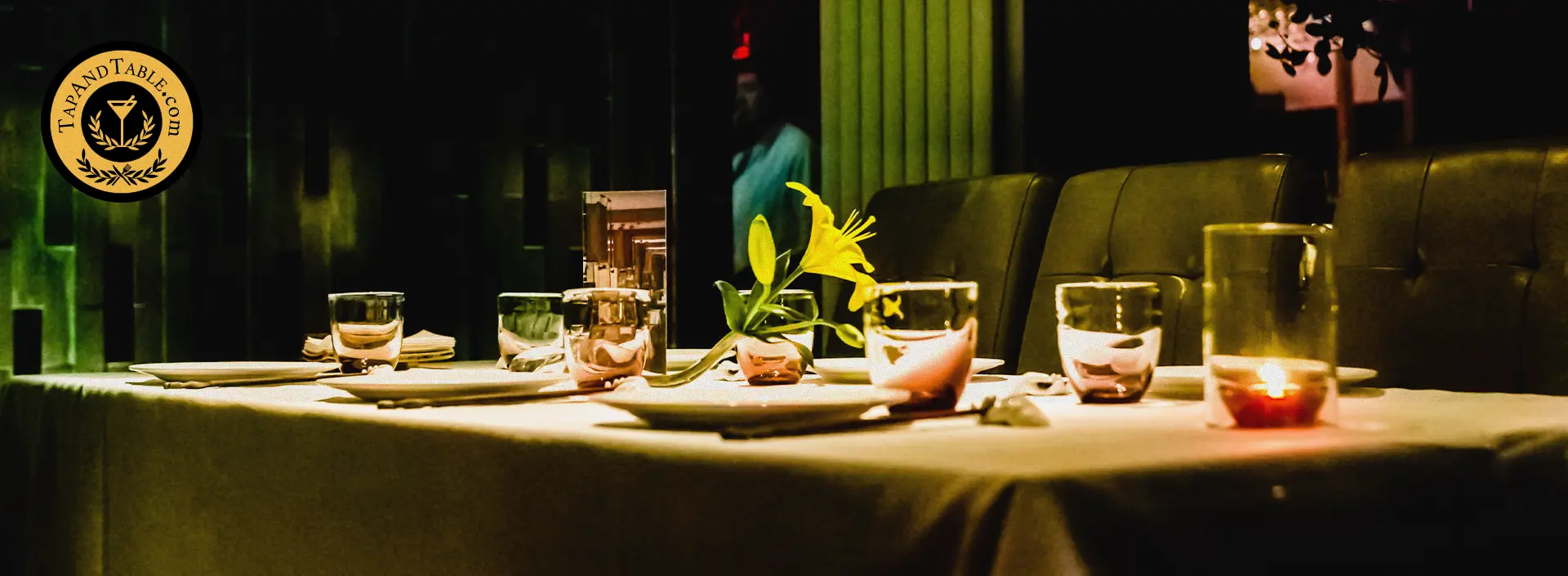
The ambiance includes dim lighting, tablecloths, good service, and other features, all designed to provide a calming experience to the diners.
To be successful, there must be coordination of site selection, menu development, staff, supplier relationships, marketing channels, and financial controls. At TapAndTable, our experience shows that fine dining profitability typically falls between six percent and ten percent due to the high cost of skilled workers and rare ingredients. As a result, the sales of fine dining restaurant operators depend on minimizing waste and maximizing table reservations while still maintaining quality levels.
This guide works alongside a complete fine dining restaurant business plan to help operators structure every phase of launch and growth. Let’s start by understanding what fine dining really involves.
1. Site Selection and Restaurant Concept Development
The process for selecting a site and creating a concept for a restaurant involves evaluating key factors to maximize the number of affluent customers interested in experiencing unique meal experiences. To do this, operators assess potential site locations by reviewing the U.S. Census data regarding households earning over $150,000 annually within five miles of the selected site. Then review city-level reports, and track the number of competitors located within two businesses per square mile.
Combining all three data sources provides operators with an overview of the potential to attract affluent diners who want to enjoy an experience with their meal. For example, if a restaurant were to be planned within close proximity to the corporate office of a company, the restaurant could also expect to draw a large lunch business due to the corporate office being occupied by many customers.
Once the Location Works, the Idea Still Has to Stand Out
When developing a concept for a restaurant, the first step is to conduct a market gap analysis as it relates to the fine dining segment of the restaurant industry. This process involves surveying around 200 local residents to determine what types of meal experiences are desired in the community. The next step in creating a brand identity for a fine dining concept is to select a name for the business that evokes an idea of elegance. For example, “Elysian table” (one example of a name that could be used for a modern fine dining concept).
The next step is to create a distinct visual identity by incorporating neutral colors for the wall palette, as well as by using gold for cutlery. The established brand identity must also be integrated into the restaurant’s floor plan design by positioning the kitchen so it is visible to guests, creating a theatrical effect. This unique method of differentiating a fine dining experience will lead to repeat customer loyalty due to the special stories associated with dining at this establishment.
2. Menu Design and Pricing Strategy
Consider creating menus that are based on ingredients available for the season. It allows you to control costs by sourcing them locally when they are available. For example, Heirloom Tomatoes will be available in the Summer for $2/pound through local farms; however, they would cost $4/pound to have them imported.
In order to calculate what the costs of your dishes will be, you need to add together the prices for the ingredients, the labor time to create the dish at ~$25.00 per hour, and the overhead of the operation at a rate of 15%. As an example, to determine the cost associated with creating a Seared Foie Gras appetizer, you can add the ingredient costs ($8.00), the labor cost associated with creating the dish ($3.00), and overhead ($1.50). If you add these together, you will arrive at a $12.50 cost. You can then price your dish at $38.00 for a 200% markup, thereby making a profit.
- Core Dishes: Identify 5 core items to include on your menu. Select core items that balance proteins such as Wagyu Beef and Sea Bass.
- Pairings: For each entrée, select a wine to pair with the dish. You can charge $15-$20 for a glass of wine. Adding wine to each of your entrées can boost your average check by ~30%.
- Test Profitability: Offer a sample of 50 portions of your dish to your guests. Track the sales of each trial period to determine if you need any adjustments.
- Quarterly Review: Review supplier pricing, fine dining restaurant trends, and guest feedback via comment cards. Take these into consideration to make changes, to continuously improve your menu, and ensure that your desired profit margins are maintained above 35%.”
Ultimately, this strategy provides financial sustainability by linking the artist’s creativity with cost-efficiencies when designing a fine dining menu, and as a result, accurately preparing a dish allows you to reduce your waste percentage.
3. Team Recruitment and Training Protocols
Recruit chefs with certifications from institutions such as the Culinary Institute of America or comparable, as well as having 6+ years of experience in Michelin-star level kitchens. In addition, servers must be screened for at least some level of wine varietal knowledge, and how to describe all dishes accurately, and role-play interviews should be utilized to evaluate poise under high pressure.
This is Where Service Either Feels Effortless or Falls Apart
Train a sommelier who has received certification from the Court of master sommeliers to facilitate and create the wine list, thus allowing more experienced individuals to offer a broader array of wines by upselling.
Training modules regarding fine dining service standards should cover all forms of greeting guests within 30 seconds, presentation of food, and clearing plates without making any sound. Weekly drills should be run to simulate peak hours and measure the time it takes the entire team to perform a 4-course service in 90 minutes.
Utilize Mystery Shopper reports to assess the performance metrics, such as attention to detail and knowledge of adc (accuracy, detail, and care), and score on a scale of 10.
4. Vendor Negotiation, Supply Chain, and Compliance
When sourcing suppliers for items like truffles, aim for samples from a minimum of three vendors. After conducting quality tests to evaluate aroma and texture, make an informed purchasing decision. Negotiate price contracts with the suppliers, volume discounts of 15% off for large orders, such as 100 pounds. Ensure proper shipping and receiving schedules to minimize storage requirements (shipping twice a week), and create a process for managing inventory using an automated inventory management solution like Toast.
How Paperwork Mistakes Cost You More Than Expected
As far as compliance is concerned, submit applications for alcohol licenses and provide the necessary documentation (I.E., floor plans and background checks) to state licensing boards at least 120 days before you open your business. Every three months, conduct health inspections and keep records of the temperature maintained on perishable goods and how you monitor and control the temperatures of those items.
One way to eliminate the potential pitfalls that could cause delay and incur additional costs from incomplete filing of paperwork is to hire a professional to ensure all applications are complete and correct. Any delays in filing applications can cost as much as $10,000 per week in lost revenue.
5. Digital Presence and Marketing Tactics
To optimize your restaurant’s website for search engines and AI chatbots, such as Google, ChatGPT, and Perplexity AI, target keywords like ‘fine dining downtown [your city]’ and aim to rank in the top three results returned by search engines (Google) for that keyword phrase. Monitor website traffic using a tool like Google Analytics and set a goal of 5,000 visits per month.
Why Attention is Irrelevant if It Does Not Turn Into Bookings
Run social media campaigns (I.E., Instagram) and provide high-quality images of your restaurant’s menu items every day. The goal is to develop an Instagram following of approximately 1,000 followers every three months.
Address reviews posted on various review sites (Yelp, for example) within 24 hours of being posted. Responding to negative reviews with incentives to return will likely convert those individuals into customers.
Integrate a reservation system (as an example, OpenTable, or a similar company) into your restaurant website and synchronize the reservation system in real time. This will convert website visibility into potential customer bookings.
6. Operational Efficiency, Financial Monitoring, and Sustainability
Luxury restaurant operations require you to have an efficient way for guests to arrive, check in, and be seated with excellent guest service.
- Point-of-sale (POS) system: It can be used to track customer orders and provide alerts if serving time exceeds 20 minutes. People come hungry to the restaurant, and nobody likes to wait this long for the food.
- KPIs (Key performance indicators): The weekly calculation of your food cost percentage = inventory/(total revenue) x 100, with a goal of maintaining a food cost percentage less than (30%).
- Strategy adjustments: Evaluate the labor ratio, and if this ratio hits 35 percent, analyze peak sales hours and staff hours.
- Sustainable practices: Create sustainable initiatives by sourcing all organic fruits/vegetables, diverting waste through compost, recycling anything that could be reused instead of sending it to the landfills, and replacing incandescent lighting with LED lighting.
Utilization of these practices will enable long-term sustainability in a luxury restaurant operation, as data-driven business decisions will increase net profit by (8%) and the use of eco-friendly products will improve a restaurant’s reputation with the environmentally conscious consumer, resulting in an increase in total sales.
How TapAndTable Helps Run Luxury Restaurant Operations
TapAndTable works with fine dining operators to turn structure into results. From site selection and concept planning to menu engineering, vendor negotiations, staffing systems, and digital visibility, we do everything that takes your business to new heights.
In addition to all sorts of consultation services, we help fine dining restaurants reduce waste, improve table utilization, and maintain quality without losing control of costs.
Where TapAndTable provides value
- Restaurant concept development, location searching, and brand identity
- Costing and restaurant menu engineering
- Vendor and supply chain negotiations
- Employee training and systems aligned with fine dining service standards
- Digital strategy/reservation and customer retention
All of these elements contribute to the overall purpose of providing a high-quality experience for the luxury guest.
Conclusion
These elements work in conjunction with one another: the sites enable the concept, the menu provides funding for the team, vendor relationships provide compliance, digital media/marketing fill the seats, and ongoing monitoring sustains the business. Assess your prior quarter’s financials against the benchmarks established and make adjustments to one area (menu pricing, for example). Track your progress for a month and assess the results.
Request a consultation to improve margins and guest experience.
Frequently Asked Questions
What is the average time frame it takes for fine dining restaurants to generate profits in the US?
For fine dining restaurants, it generally takes 12-24 months to achieve stable profits. It is required to overcome high fixed costs and to develop operations. However, effective cost control measures and an adequate number of reservations help reduce the time to profitability.
What role does chef branding play in the success of fine dining restaurants?
Chef branding creates a relationship of trust and sets guest expectations upon arrival at the establishment. It provides guests with justification to pay a premium for the meal and generates media attention for the restaurant. However, branding is not as important as having good operational systems in place to support the meal experience.
How often should a fine dining menu be refreshed?
Small menu updates should happen seasonally. Core dishes can stay longer if they perform well and control costs. Full menu overhauls are usually needed once or twice a year.
How do fine dining restaurants attract repeat local guests, not just special-occasion diners?
By providing familiarity to the locals, restaurants encourage them to be regular customers instead of just special occasion customers. In addition to having reasonably priced prix fixe items or bar menus, having personalized customer service and recognition converts a first-time guest into a repeat customer.